California Condor
California Condor (Gymnogyps californianus)
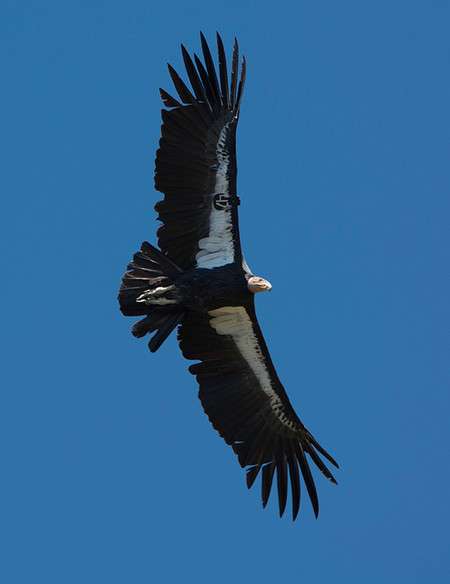 Photo credit: SeeMonterey.com
California condors are currently being reintroduced to the central coast by the Ventana Wildlife Society, which is a non-profit, 501(c)3, organization. The Society is dedicated to the preservation of native plants and animals through research, education, and restoration. By the efforts of the Ventana Wildlife Society, Condors are now seen throughout the mountains, coastal canyons and valleys of Big Sur. You can help in these efforts by donating time or money. Please contact the Ventana Wildlife Society directly if you would like to help.
At the turn of the century, the California condor population began to plummet after decades of wanton shooting and poisoning. While habitat loss is a factor and limits the total population, the habitat that remains is still intact to sustain a population of condors. In 1987, the last wild condor was taken into captivity to join 26 others. A successful captive breeding and reintroduction program turned the tide. In 1998, the total population reached 150 birds, and 35 of those were in the wild.
Given the success of bald eagle reintroduction, Ventana Wildlife Society was requested by the US Fish and Wildlife Service to join the California Condor Recovery Program in a ten-year first phase effort to bring the condor back from the brink of extinction. VWS is the first private non-profit in California to release condors. These majestic birds can be seen flying over the mountains and valleys of California's Central Coast. The goal of VWS is to restore condors to California.
Condor Facts
Range: In 1800, from Baja California to British Columbia; reintroduced populations in central and southern California and in northern Arizona
Food: Carcasses of large animals such as deer, cattle and sea mammals.
Wingspan: Up to 11 feet
Weight: 20 to 25 pounds
Life Span: 60 to 80 years; they mate for life.
Reproduction: One egg every two years in the wild.
Flying Ability: Over 150 miles in a day.
Condor watching locations:
- Andrew Molera State Park, Big Sur
- Bottchers Gap, Big Sur
- Jacks Peak, Monterey
- Julia Pfeiffer Burns State Park, Big Sur
- Pfeiffer Big Sur State Park at the Big Sur Lodge
For More Information Contact:
Ventana Wildlife Society
Condor Field Notes for 2006
The towering mountain peaks of the Ventana Wilderness soon become solemn island sentinels in a sea of rolling clouds. High up above at basecamp the scenic view looks out upon an ocean of fog stretching to meet the horizon. Far down below, the lower elevations remain shrouded ...
Condor Field Notes for 2005
The Big Sur condors met the New Year with bright and curious eyes as they swooped down upon a backcountry feeding site to investigate the mammoth-sized meal awaiting them. On January 4, a day that was most likely a first for all of the Big Sur birds, an elk carcass was ...
Condor Field Notes for 2004
The month of January was surprisingly temperate here in Big Sur. Some rain drifted through here and there, but the interludes were nothing but warm, sunny, breezy days. The condors responded by moving leisurely through the Big Sur area. ...
Condor Field Notes for 2003
January was unusually warm and summer-like with an abundance of clear, sunny days. The break in the weather gave the condors a chance to dust off their wings and make some good flights. It also gave the some of the adult male condors a chance to establish pair bonds with the ...
Condor Field Notes for 2002
Three newcomers arrived to the release site this month. Condor chicks R36, R51, and R54 were transported from Los Angeles Zoo and San Diego Wild Animal Park to Ventana Wildlife Society's Big Sur release site on January 24, 2002. These three chicks are 8-9 months in age and ...
Condor Field Notes for 2001
Numerous storms made landfall on the Big Sur coast range this month bringing high winds, heavy rains and even hail at times. The high ridges above the condor release site were blanketed with light snow after one storm, leaving the condors in a deep chill for a few days. The ...
Condor Field Notes for 2000
January finally brought winter to Big Sur and with it three storms which kept the condors roost-bound for days on end. When the weather cleared up most of the movement by the condors was between the release site and Pfeiffer Big Sur State Park. ...
Condor Field Notes for 1999
December, here in Big Sur, started out relatively cold, at times dipping into the thirties Fahrenheit. As the month progressed, however, it heated up and the lack of rain made a pleasant environment for the new chicks. All the chicks are progressing very well. ...